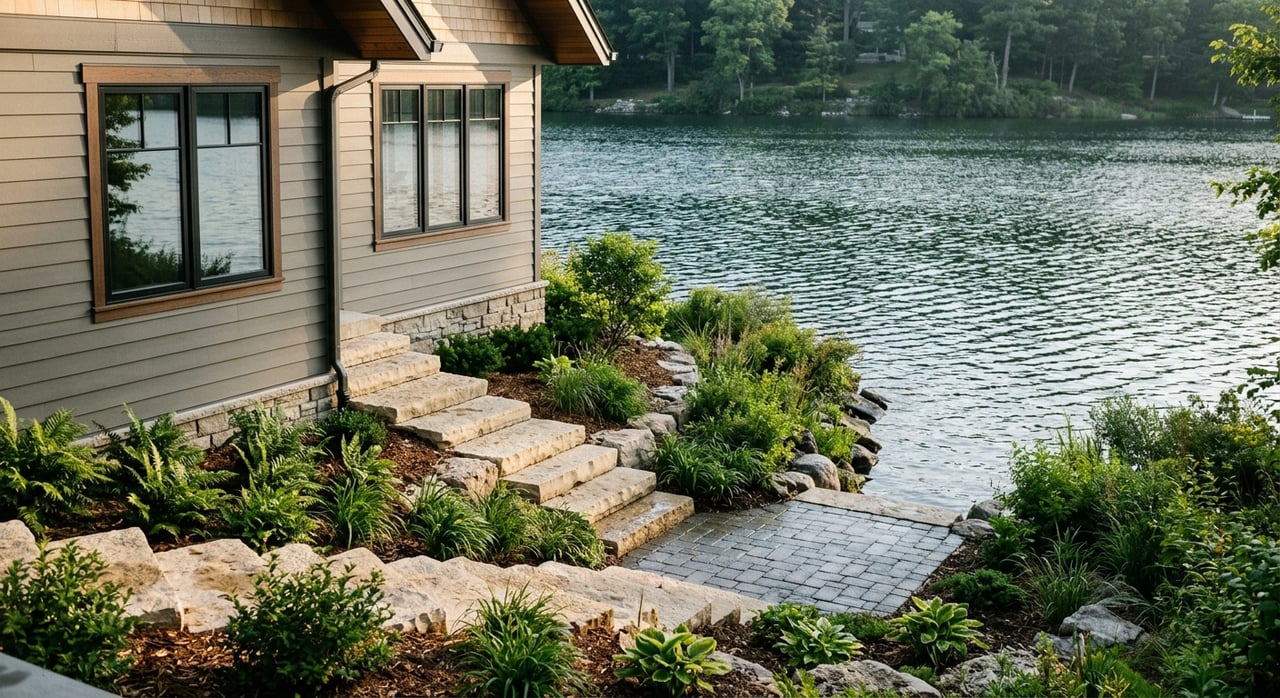
Investing In Property Around Lakes Monona Waubesa Kegonsa
April 2, 2026
April 2, 2026
If you are thinking about buying property near Lakes Monona, Waubesa, or Kegonsa, you are probably asking the right question first: is this a lifestyle buy, an investment, or both? That matters here because south-lakes real estate can offer strong long-term appeal, but the numbers depend on location, seasonality, and local rules. In this guide, you will get a practical look at market conditions, rental potential, waterfront tradeoffs, and the key due diligence steps to take before you buy. Let’s dive in.
The market around Madison and Dane County remains tight, and that backdrop supports interest in well-located homes near the water. According to the City of Madison’s 2025 Housing Snapshot, demand still outpaces supply, with a 4.8% stabilized rental vacancy rate and a 0.6% owner-occupied vacancy rate. The same report also shows median monthly rent rising from $939 in 2015 to $1,364 in 2023.
That broader supply pressure matters if you are buying around the south lakes. Even if a property is not directly on the shoreline, it may still benefit from recreation access, limited housing supply, and steady resale demand. In ZIP code 53711, realtor.com market data shows a median listing price of $487,400, 42 homes for sale, and a median rent of $2.5K.
ZIP code 53711 is not purely a waterfront ZIP, but it does connect to the south-lakes story. Goodland County Park sits on the west shore of Lake Waubesa and falls within 53711, which gives the area a direct link to one of the main recreation points in the lake system.
For you as a buyer or investor, that means some homes in 53711 may offer a lake-oriented lifestyle without being true waterfront properties. That can create a different value equation, with a lower entry point than direct frontage but continued appeal tied to access, recreation, and proximity.
One of the most important things to understand is that lake-area demand is not flat throughout the year. Public sources do not provide a lake-by-lake occupancy history for Monona, Waubesa, and Kegonsa, but the available recreation and access data points to late spring through early fall as the strongest demand window.
Lake Kegonsa State Park offers a beach, boat launch, trails, camping, fishing, and year-round access. Madison beaches typically open in early June and stay open through September, and Monona lake access permits are available year-round. Monona’s Yahara River Night Market also runs on Thursday evenings through the end of September, adding to warm-season activity.
The practical takeaway is simple: if you are modeling income, be conservative outside the core lake season. A property that performs well in summer may not produce the same results in winter, especially if your plan depends on short-term guests rather than long-term tenants.
The best lake-area purchases usually start with a clear use case. Around Lakes Monona, Waubesa, and Kegonsa, that often means choosing between four common paths:
This is important because the same home can look very different on paper depending on how you plan to use it. A second home that offsets costs with selective summer rentals is not the same as a property meant to produce steady year-round income.
If you are considering short-term rental income, local rules may shape your options more than the nightly rate does. Madison and the Town of Dunn do not use the same framework, so parcel location matters.
In Madison, a short-term rental is a structure rented for fewer than 30 nights. The city requires a Zoning Tourist Rooming House Permit before advertising, and the dwelling must be the host’s primary residence for 12 consecutive months before operation.
If the host is absent, the rental can operate only 30 nights per licensing year. If the host is present, there is no day limit. Madison also requires a Public Health tourist rooming house license and a transient room tax permit, along with a $300 one-time application fee and a $100 annual renewal fee for the zoning permit.
The Town of Dunn, which includes shoreline on Lakes Waubesa and Kegonsa, uses a different set of rules. Under the town’s short-term rental regulations, any property operated or advertised for more than 10 days per year needs a permit, and the 2025 permit fee is $450.
If the property is not the operator’s primary residence, or if more than two bedrooms are offered, the minimum stay is 7 nights and rentals are limited to 180 days in any consecutive 365-day period. If the property is the operator’s primary residence and the operator stays with guests in one or two bedrooms, there is no minimum stay and no annual day cap.
These differences can materially change your projected returns. A home that seems attractive for short-term rental use may be far less flexible if the municipality requires owner occupancy, limits rental nights, or sets a minimum stay.
That is why south-lakes investing is rarely about chasing one universal cap rate. It is about buying the right property for the right use under the right local rules.
Many buyers assume waterfront is always the better investment. In reality, it is often the more complex one.
True waterfront usually offers stronger amenity value, narrower supply, and more buyer interest tied to frontage, views, or dock access. Research summarized in an MDPI waterfront valuation study shows that water proximity and water views are often reflected in home values, though the premium can vary widely by market and property characteristics.
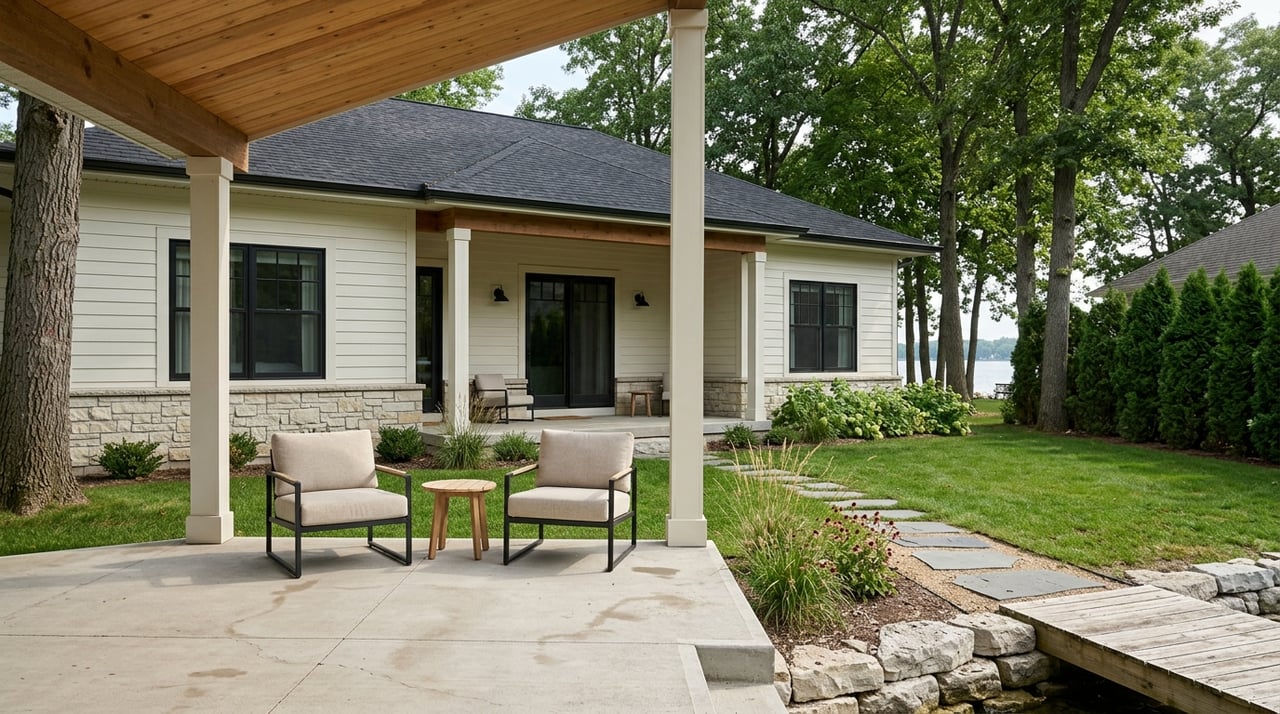
Lake-adjacent homes can offer a different advantage. You may get lower acquisition costs and fewer direct shoreline constraints while still benefiting from nearby recreation and long-term market demand. In many cases, the better buy depends on whether you value income flexibility, personal use, lower maintenance exposure, or future resale appeal.
Before you buy any lake-area property, you need a clear picture of what can and cannot be done on the site. In Dane County, lands within 1,000 feet of a lake or pond, or 300 feet of a river or stream, fall into the shoreland zoning district.
According to Dane County shoreland zoning guidance, review may be required for new structures, additions, impervious surface work, vegetation removal within 35 feet of the ordinary high-water mark, and boathouses. Wisconsin’s minimum shoreland standards also require a 75-foot setback from the ordinary high-water mark for most buildings.
If your investment strategy includes remodeling, adding square footage, reworking the lot, or changing the shoreline area, these rules need to be part of your underwriting from day one. What looks like upside on paper may be restricted by setbacks, vegetation rules, or permit requirements.
For Lake Monona properties especially, floodplain review is not optional. The City of Monona notes that many waterfront parcels fall within FEMA, DNR, and city flood-hazard boundaries.
That does not automatically make a property a poor fit. It does mean you should treat floodplain and shoreline review as a practical step in evaluating cost, risk, insurability, and renovation potential. Dane County’s lake management role also means changing water conditions, erosion, aquatic plants, and emergency slow-no-wake orders can affect waterfront ownership experience over time.
If you are buying for investment or mixed personal use, a conservative model is your best friend. Rather than relying on one headline number, it helps to understand a few basic measures:
As explained in Freddie Mac’s capitalization rate guidance, cap rate helps convert expected NOI into present value. But for properties with uneven or seasonal income, especially short-term rentals, that metric is only part of the story.
For a property around Monona, Waubesa, or Kegonsa, your pro forma should account for:
A smart approach is to run at least two scenarios: a conservative off-season case and a stronger summer case. That helps you see whether the property still works if demand softens or rental rules limit usable nights.
Lake-area investing is not only about current rent potential. It is also about long-term desirability.
The City of Madison approved the Lake Monona waterfront plan in 2024, with construction expected to move toward 2027. Public investment like this can strengthen the long-term appeal of nearby areas by improving access, amenities, and the overall waterfront experience.
That does not guarantee appreciation for every parcel. It does support the bigger picture: homes tied to well-used recreation and public waterfront improvements may remain attractive to future buyers, especially in a supply-constrained region.
If you are evaluating a property around these lakes, keep your attention on a few core questions:
Those questions can help you avoid overpaying for a label like “near the lake” or assuming a waterfront home will automatically perform better. In this market, the strongest decisions tend to come from matching the property type to your actual plan.
If you want local guidance on evaluating homes around Lakes Monona, Waubesa, and Kegonsa, Kristine Jaeger can help you compare neighborhoods, review market context, and think through the practical tradeoffs before you move forward.
Stay up to date on the latest real estate trends.
Get assistance in determining current property value, crafting a competitive offer, writing and negotiating a contract, and much more. Contact us today.