Monona, Waubesa, and Kegonsa Don't Drain on the Same Clock. Here's the Order the Yahara Chain Actually Empties.
October 1, 2026
October 1, 2026
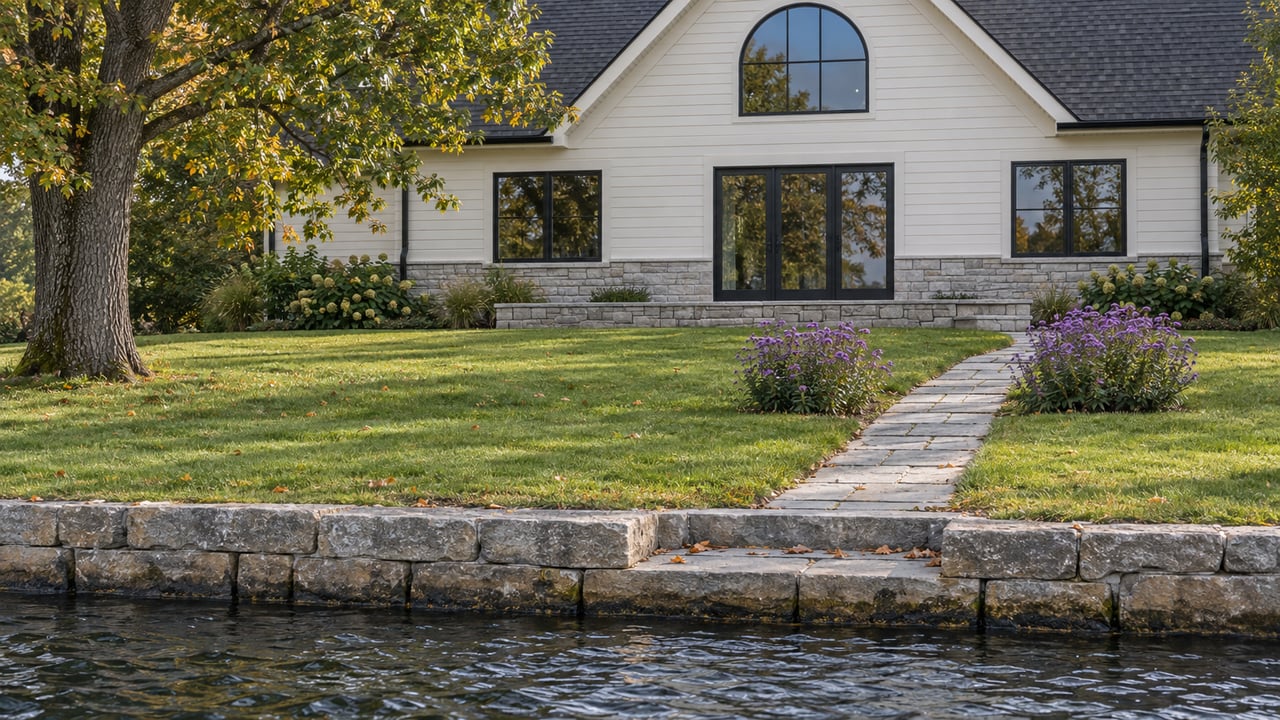
Late September on Lake Waubesa still looks like summer. The docks are full, the water near Babcock County Park hasn't cooled enough to end the boat traffic, and nothing on the surface signals that the season is closing out. But every fall, Dane County starts a drawdown that touches Monona, Waubesa, and Kegonsa on three separate timelines, not one. The chain looks like a single body of water from a pontoon. To the county's Land and Water Resources Department, it's three lakes with three locks, three targets, and three closing dates that don't have to line up.
That distinction matters if you live on any of these three lakes, because the paperwork that governs your shoreline this time of year isn't written for "the chain." It's written lake by lake.
Each of these lakes has its own lock and dam, and each lock is tied to that lake's own water level, not the chain's average. Monona sits below Tenney Lock, the largest of the three, which connects the Yahara River between Mendota and Monona. Waubesa has the Babcock Lock, at Babcock County Park in the Village of McFarland. Kegonsa has the LaFollette Lock, at LaFollette County Park near Stoughton.
The county's own lake levels page makes the asymmetry explicit: at any given point, Babcock Lock can be open to navigation while LaFollette Lock is closed, because Waubesa and Kegonsa aren't required to hit their targets at the same pace. Dane County's Land and Water Resources Department manages levels for all four lakes in the system, and it runs each dam to bring that specific lake down to its own summer minimum, not to some chain-wide average.
Practically, that means a Waubesa property owner watching the Babcock Lock and a Kegonsa property owner watching LaFollette are working off different signals. One lock closing to navigation doesn't tell you anything about the other. If you're timing a haul-out or a last paddle through the lock system before the season ends, the lake you're on is the only calendar that counts.
The visible part of this transition isn't the water level. It's the roughly 160 navigational buoys the county places across the Yahara River and lakes every year to mark no-wake zones, rock obstructions, and channel centers. Removal starts October 1 and isn't finished until November 1, according to Dane County's own press releases on the schedule. That's a full month where some of the markers you've been reading all summer are already gone while the water still looks like it did in August.
The county's guidance during that window is blunt: lake users are asked to use caution and watch for underwater hazards that may damage a boat, precisely because the visual cues you're used to are disappearing on a rolling basis, not all at once. If you're getting one more evening out before the season ends, the lake in mid-October isn't marked the way it was in July, even if nothing else about it looks different.
| Lake | Lock and Dam | Park / Village | What November 1 Means There |
|---|---|---|---|
| Monona | Tenney Lock | Tenney Park, City of Madison | Lock closes for the season as the county shifts to winter operating levels |
| Waubesa | Babcock Lock | Babcock County Park, Village of McFarland | County access piers come out everywhere else, but Babcock's stays in through winter |
| Kegonsa | LaFollette Lock | LaFollette County Park, near Stoughton | Lock closes to navigation on its own schedule, independent of Waubesa |
Here's the detail that surprises people who assume the drawdown treats every access point the same way. County guidance sets November 1 as the date piers come out at county access sites across the chain, with one named exception: the access pier at Babcock County Park on Lake Waubesa stays in place and stays open through winter.
Every other public pier on the schedule follows the standard deadline. Babcock's doesn't, and the county has said so directly in its own seasonal notices. It's a small carve-out, but it's the kind of detail that only shows up if you're reading the actual schedule rather than assuming "the lake closes November 1" applies evenly across Monona, Waubesa, and Kegonsa.
The county's deadline governs public access points. Private piers and docks are the owner's responsibility, and the timing pressure is the same even if the paperwork isn't identical. As water drops toward winter minimums, a pier left in too long risks sitting in mud or getting caught by early ice rather than lifting cleanly with the water.
Dane County's guidance to lakefront owners at haul-out includes a specific ask that's easy to skip: check for zebra mussels on the submerged sections of piers, docks, and boats before pulling them out. Zebra mussels attach to hardware below the waterline, and left unchecked they can clog water intakes and pipes and encrust the parts of a pier or motor that sit underwater all season. Their shells are sharp enough to cut bare feet, which is the more immediate reason to deal with them at haul-out rather than next spring when the same pier goes back in.
None of this is unique to one lake in the chain. It's a seasonal task tied to the same drawdown that's moving through Monona, Waubesa, and Kegonsa on their separate schedules, which means the right week to handle it on your dock isn't necessarily the right week on your neighbor's, even if your neighbor is two coves over on the same lake.
The Dane County Sheriff's Marine and Trail Enforcement Bureau runs patrol boats through the summer season on each of the four main lakes, with two boats on Mendota and one on each of Monona, Waubesa, and Kegonsa, plus a trailered boat for the smaller lakes in the county. That patrol presence is built around a boating season that includes more than 25,000 registered boats countywide, based on the bureau's own figures.
Once the lakes freeze, the same office shifts its public messaging from boat safety to ice safety, warning each winter that early ice is unpredictable and that lake users should check conditions locally before heading out rather than assuming a frozen surface is a safe one. The handoff from boat patrol season to ice season isn't a single flipped switch either. It follows the same logic as the drawdown: each lake gets there on its own timeline, based on its own depth, its own exposure, and its own conditions that year.
That's the throughline across all of this. The chain reads as one system from a map, but the rules that actually govern a given fall week, whether it's a lock closing, a pier deadline, or a patrol boat coming off the water, are set lake by lake. Knowing which lake you're actually watching is the only way to know which deadline applies to you.
If you're weighing a place on Monona, Waubesa, or Kegonsa and want someone who tracks these lake-by-lake details before they turn into a fall surprise, Madison Real Estate Team is worth a conversation before the locks close for the season.
Stay up to date on the latest real estate trends.



Get assistance in determining current property value, crafting a competitive offer, writing and negotiating a contract, and much more. Contact us today.